Why Nordic pine is so durable: the secret of heartwood
In Finland and other European countries, timber homes 200 to 300 years old are still standing. Their longevity comes down to heartwood.
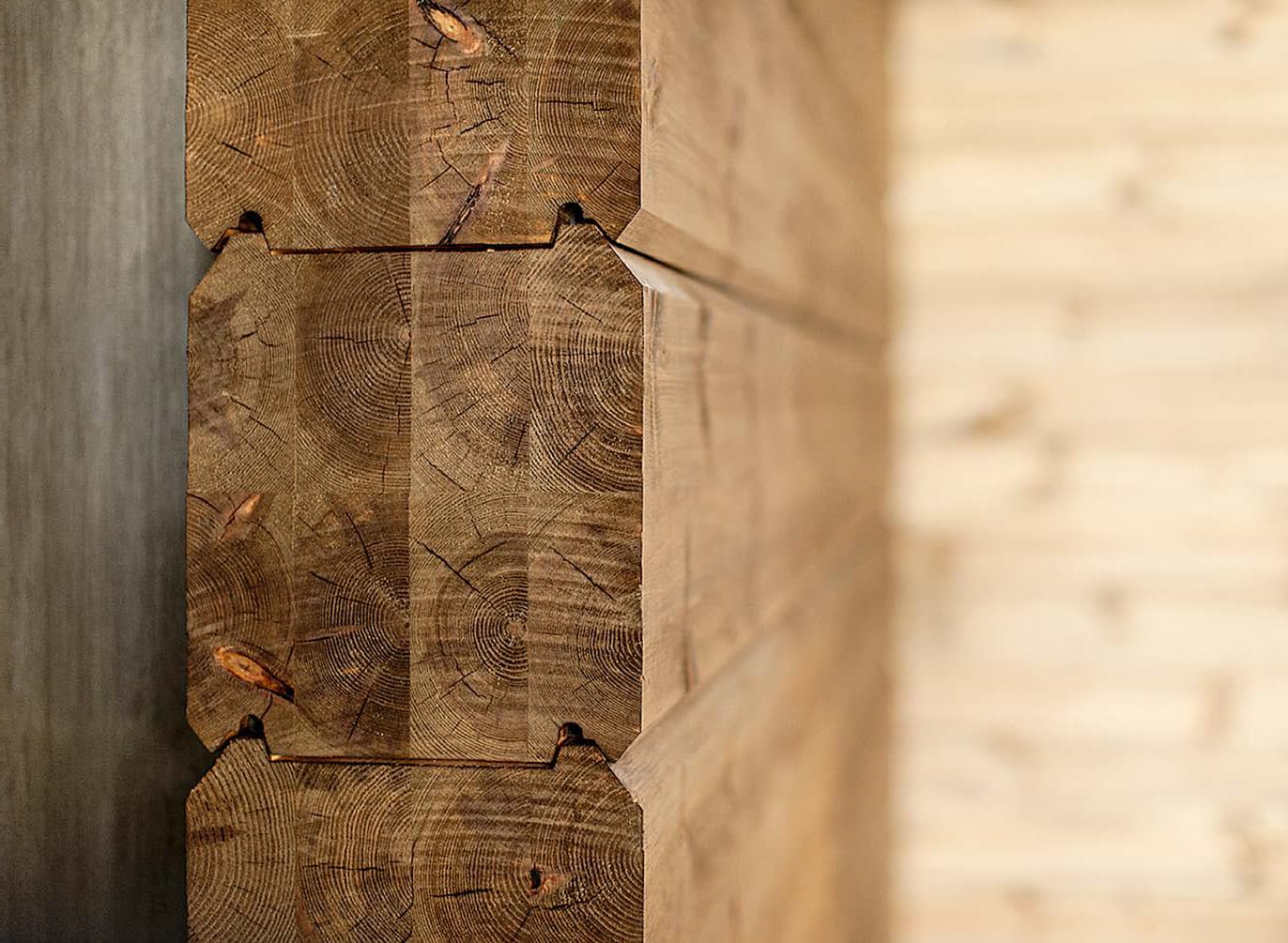
In Finland and other European countries, wooden churches, townhouses and farmhouses 200 to 300 years old still stand in good condition today. The secret to their longevity is in the material — Nordic pine. It contains a high proportion of heartwood: the darker wood at the centre of the trunk, rich in resin and natural compounds with antibacterial properties, resistant to mould and moisture.
The pine we use for our SmartLog™ beams grows near the Arctic Circle. Growing further north, it grows more slowly, giving it up to 20% more heartwood than pine from southern or central Finland. When making a beam, we also always orient the heartwood outward — towards the exterior surface, where it faces the weather and needs the most protection.
Wood indoors has a measurable effect on the wellbeing of the people inside, too. An Austrian study in a primary school found that children's heart rate in a classroom built from solid wood was, on average, 6 beats per minute lower than in a classroom built from brick and plasterboard — a lower resting heart rate is generally associated with lower stress levels.
Add to that the acoustics of a log home (timber walls don't echo the way bare walls do) and the thermal memory of pine wood, which keeps the interior pleasantly cool in summer and warm in winter — and during spring and autumn, the wood also stores solar energy and gradually releases it back into the room.
Want to talk through your log house?
Tell us about your plot and vision — we'll talk through the options and send a rough estimate.